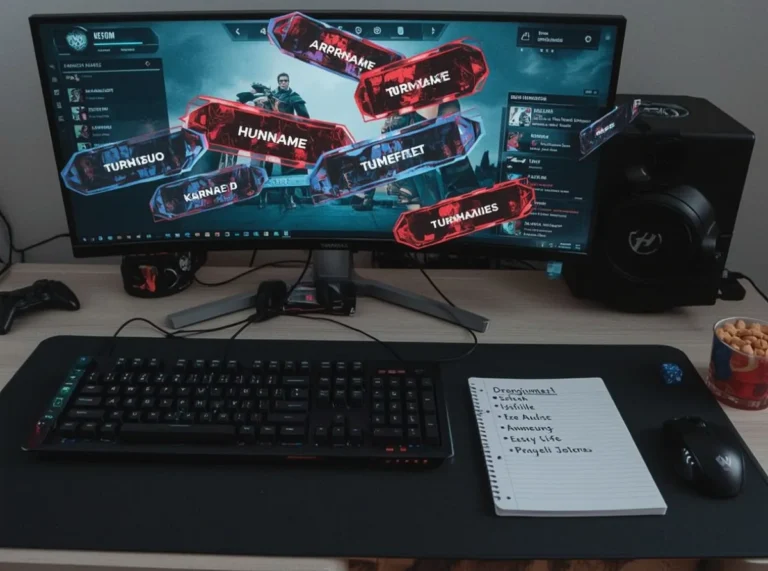
Competitive esports names tend to do a few things at once. They look sharp on a scoreboard, sound clean in voice chat, and stay memorable after a match ends. That balance matters more than people usually think.
A name can feel powerful without being loud. It can suggest speed, control, precision, or calm pressure. In esports, those details often matter because the name becomes part of the player’s identity long before anyone knows the full story behind it.
Good competitive names also have a practical side. They need to be easy to say, easy to read, and easy to recognize in fast-moving spaces like tournament brackets, stream overlays, and team rosters. A name that looks stylish in a profile but gets awkward when spoken out loud usually does not hold up for long.
That is why competitive naming tends to favor certain patterns. Short forms, strong consonants, clean symmetry, and subtle intensity show up again and again. The best ones feel intentional without trying too hard.
What makes a name fit competitive esports style
Competitive esports names usually work best when they feel controlled. They do not need extra symbols, complicated spelling, or layers of meaning that make them hard to remember. Instead, they rely on clarity and presence.
There are a few qualities that commonly define this style.
- Easy to read: teammates, casters, and viewers should recognize it quickly.
- Easy to pronounce: names that sound natural in speech are easier to spread.
- Compact structure: shorter names often look stronger in overlays and scoreboards.
- Distinct sound: a name should stand apart from common usernames.
- Stable tone: the name should still feel right in a serious match, not only in casual play.
Competitive names often lean toward clean edges. Hard consonants like K, R, X, T, and V can give a name a focused feel. That does not mean every strong esports name needs to sound aggressive. Some of the most effective ones feel calm, technical, or precise instead.
A competitive name usually works when it can survive three places at once: a lobby, a bracket, and a broadcast. If it reads well in all three, it is on the right track.
There is also a difference between being memorable and being complicated. A name that is too ornate can become tiring. A name that is too plain can disappear. Competitive style sits between those two extremes.
Short names that feel sharp and tournament-ready
Short names are common in esports because they are efficient. They look good on a team list and do not crowd the screen. They also tend to sound confident when spoken quickly.
These names work especially well if you want a clean competitive look without much extra decoration.
- Vex
- Rift
- Knox
- Flux
- Drift
- Jett
- Vale
- Nyx
- Crux
- Pyre
- Hex
- Zero
Short names often fit players who want a direct identity. They can feel modern, tactical, and easy to remember. They also leave room for a team tag or organization prefix if one is ever needed.
Names like Vex and Crux feel tighter and more competitive because they end quickly. Rift and Drift carry motion, which gives them a little more personality. Zero is simple, but it works because it has a clean, almost clinical presence.
Short names with a colder edge
Some players prefer names that feel a little more severe. These can suggest focus, pressure, and a no-nonsense approach.
- Frost
- Shade
- Slate
- Omen
- Grave
- Shiv
- Warden
- Rune
- Glitch
- Cipher
These names work because they carry atmosphere without becoming difficult to use. Cipher suggests intelligence and hidden structure. Warden feels steady and controlled. Shade and Omen are more dramatic, but still readable.
If a short name feels too plain, adding a concept like motion, defense, or mystery can give it more character without making it messy.
Names that sound precise and technically strong
Some esports names feel competitive because they sound engineered. They suggest reaction time, calculated play, and a sense of structure. This style is especially common among players who want their name to feel modern rather than mythical.
These names often use clean syllables and controlled intensity.
- Vector
- Module
- Anchor
- Kernel
- Pulse
- Signal
- Static
- Torque
- Atlas
- Matrix
- Nova
- Scope
Vector and Torque feel direct and energetic. Matrix and Kernel lean more technical. Atlas has a strong, reliable tone that works well for players who want something stable rather than flashy.
This type of name is useful because it avoids common gamer clichés. It sounds serious without becoming dry. It also works across different genres, from shooters to strategy games to fighting titles.
Technical names with a sleek competitive feel
When the goal is to sound clean and modern, names with a measured rhythm often do the job best.
- SignalX
- Vectora
- PulseCore
- Vanta
- Quant
- Nullpoint
- Coreline
- Axion
- Overrun
- Neonix
Some of these are more stylized than others, but they all keep a sense of structure. Nullpoint feels cold and deliberate. Axion sounds compact and futuristic. Vanta is minimal and smooth, which makes it feel polished without being busy.
For competitive use, names like these should still be easy to say in one breath. If a name looks impressive but gets twisted in conversation, it loses some of its value during actual play.
Names with a bold, aggressive tournament vibe
Not every esports name needs to feel quiet or technical. Some players want something that sounds forceful right away. These names can carry pressure and confidence, especially in games where pacing is fast and matchups feel direct.
Bold names often use strong imagery, hard sounds, or words linked to impact.
- Ravage
- Reign
- Vandal
- Blade
- Razor
- Thunder
- Strike
- Inferno
- Ruin
- Chaos
- Domino
- Breaker
Ravage and Ruin sound intense without needing extra explanation. Breaker feels active and forceful. Reign has more control, which can make it feel more polished than pure aggression.
This style works well when a player wants the name to project confidence immediately. It can also suit team settings where names need to feel unified and strong. Still, bold names should not become hard to read. A strong tone is more useful than a crowded design.
Forceful naming works best when the word itself is clear. If the spelling becomes decorative, the impact usually weakens.
Aggressive names that still stay readable
Some names sound strong because they are simple, not because they are complex.
- Clash
- Fury
- Blaze
- Quake
- Volt
- Vigor
- Storm
- Strike
- Havoc
- Break
These are easy to understand at a glance. They also work in conversation without needing explanation. That simplicity can be a real advantage in competitive settings, where names get repeated many times across matches, clips, and fan discussion.
Names with a calm, focused competitive presence
Some of the best esports names are not loud at all. They feel steady, centered, and composed. This style can be especially effective because it suggests discipline rather than chaos.
These names often have a grounded quality.
- North
- Harbor
- Keystone
- Still
- Mercer
- Cairn
- Slate
- Harrow
- Field
- Anchor
- Elm
- Hollow
Anchor and Keystone are especially strong for this mood. They imply support, structure, and reliability. North feels directional and clear. Slate has a plainness that can be an advantage because it feels practical and composed.
This approach can be a good fit for players who do not want their name to sound theatrical. Calm names often age well too. They are less likely to feel tied to a passing trend.
Minimal names that still feel competitive
A minimalist name does not need to be empty. It just needs balance.
- Void
- Line
- Trace
- Plain
- Grey
- Mark
- Set
- Unit
- Field
- Base
These names are subtle, but they can still carry a competitive tone if the rest of the identity is consistent. They work well for players who prefer clean design and low-profile confidence.
Names that blend style and identity without feeling forced
Many of the strongest esports names are hybrids. They take a familiar word and give it just enough shape to feel distinct. This can happen through sound, slight variation, or a careful combination of two ideas.
Hybrid names often feel personal because they sit between ordinary and stylized. They are not trying to be random. They are trying to sound like a real identity.
- Veylor
- Kaelix
- Ardent
- Solen
- Thryn
- Novar
- Velix
- Corven
- Myrr
- Orven
- Talix
- Riven
These names can feel competitive because they are distinctive but still compact. Riven has a sharp edge and feels easy to remember. Ardent sounds determined and serious. Velix and Talix have the polished, modern rhythm many esports names aim for.
Hybrid names are useful when you want something unique without going too far into fantasy territory. They can also be easier to build into a personal brand than a very common word.
Stylized names with a modern roster feel
If the goal is to look ready for a team banner, these options land in a strong middle ground.
- Korin
- Velar
- Draven
- Zarek
- Oris
- Tyven
- Elix
- Rhyse
- Senix
- Caldor
These names feel like they could belong on a bracket screen or a tournament intro without sounding overdone. They are polished enough for competition but not so elaborate that they become difficult to use across different platforms.
Names that fit different competitive personalities
Esports names often reflect a player’s natural approach to competition. Some people prefer the quiet, calculated route. Others want a name that sounds decisive or fearless. The right choice depends on the tone you want to project in a match.
Here is a simple breakdown of how different naming moods tend to read.
| Mood | Name feel | Examples |
|---|---|---|
| Precise | Clean, controlled, efficient | Vector, Cipher, Scope |
| Bold | Forceful, direct, high-impact | Ravage, Breaker, Fury |
| Calm | Steady, focused, composed | Anchor, North, Slate |
| Modern | Sleek, stylized, streamlined | Vanta, Velix, Axion |
| Mysterious | Dark, subtle, layered | Nyx, Omen, Shade |
None of these moods is better than the others. The best one depends on how the name will be used. A player who likes quiet consistency may not want a name that feels explosive. A player who wants instant recognition may prefer something with a stronger edge.
The most useful question is not “Does this sound cool?” It is “Does this still feel right after a hundred matches?”
Patterns that show up again and again in esports names
Competitive naming has some recurring patterns because they work. They are not rules, but they are reliable habits that many players return to.
- One-word names: easier to remember and cleaner on screen.
- Strong endings: names ending in hard sounds often feel more decisive.
- Balanced syllables: two or three syllables usually sound smooth.
- Concrete imagery: words tied to movement, structure, or force stay memorable.
- Low clutter: fewer symbols and fewer extra characters usually improve readability.
A name like Vector fits several of those patterns at once. So does Rift. Even something slightly more stylized like Velix stays manageable because it is short and easy to say.
On the other hand, names that rely on multiple underscores, repeated numbers, or unusual spelling often lose some of the competitive feel. They may still work in a casual setting, but they tend to look less clean in esports environments.
Alternative variations on strong esports-style names
If a name is close but not quite right, small changes can help. The goal is to keep the same competitive feel while improving flow or distinctiveness.
For example:
- Vex could become Vexa or Vexor
- Rift could become Rivt or Rifter
- Cipher could become Cypher or Cyph
- Nova could become Novar or Novex
- Shade could become Shayd or Shaden
These variations keep the core identity but change the texture. Some make the name feel more unique. Others make it sound more like a tag than a dictionary word. The best variation is the one that remains easy to read while still standing apart from common usernames.
Simple mix-and-match ideas
Combining two clean concepts can create a strong esports-style name too.
- Nova Trace
- Rift Core
- Steel Vector
- Void Signal
- Storm Line
- North Byte
- Pulse Warden
- Grey Mark
- Blade Echo
- Flux Harbor
These pairs can feel more layered than a single word, but they still stay readable. They are especially useful if you want a name that sounds a little more original without becoming hard to remember.
Choosing a competitive name that lasts
Names in esports often last longer than people expect. They show up in clips, match histories, social profiles, and team communication. That makes long-term usability a real factor.
A good competitive name should hold up when the game changes, the rank changes, and the audience changes. It should still make sense when it is said quickly, typed often, or seen in a tournament format.
Some practical checks help with that:
- Say it out loud once or twice. If it feels awkward, it may not age well.
- Look at it in all lowercase and all caps. Some names change character depending on case.
- Imagine it on a team roster. Does it still look clean?
- Picture it in a caster’s voice. If it sounds clumsy, adjust it.
- Keep it short enough that it does not need constant explanation.
That kind of testing helps separate names that look good in isolation from names that actually work in competitive spaces. The difference is often small, but it matters.
In esports, a name becomes stronger when it can be repeated naturally. If people can say it without hesitation, it gains momentum fast.
Names like Atlas, Vex, Vector, Reign, and Nyx keep working because they are efficient and adaptable. They do not depend on trend-heavy formatting. They carry their own shape.
The same is true for calmer choices like Anchor or North. They may not feel loud, but they have staying power. And in competitive gaming, that steady presence can be more valuable than a name that tries too hard to stand out.
Competitive esports style favors names that are clean, confident, and easy to handle under pressure. Whether the tone is technical, bold, cold, or calm, the best options share the same core qualities: readability, rhythm, and a clear identity. That is what makes them fit the space so well.
From short tags like Vex and Rift to more polished options like Vector, Ardent, and Vanta, the strongest names feel deliberate. They work because they sound like they belong on a scoreboard, in a lobby, and in a highlight reel without changing shape along the way.