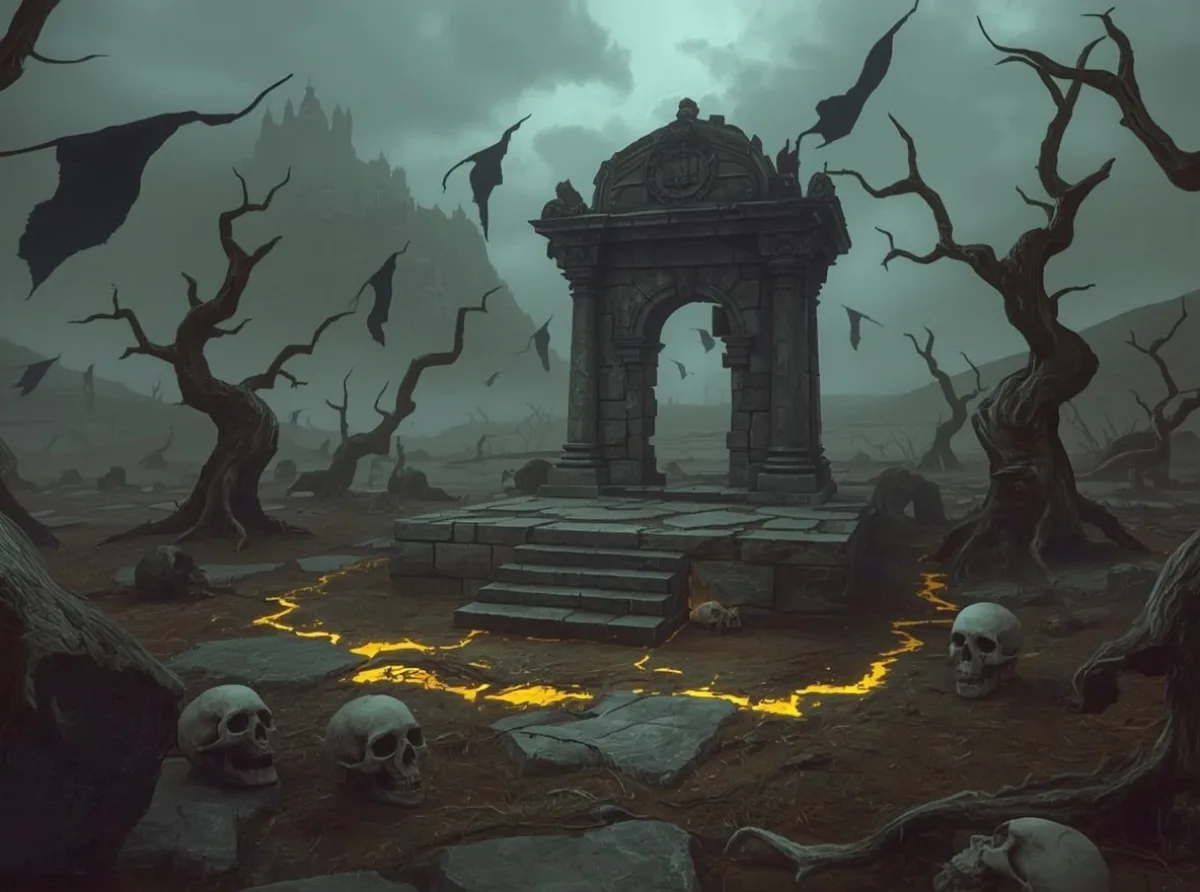
Names with a dark power style do more than sound intimidating. They carry mood, shape a first impression, and give a character, profile, or game tag a stronger edge. In Diablo 4, that edge matters because the world itself already feels heavy, ancient, and dangerous.
A good dark name does not need to be loud. Sometimes the best ones feel controlled, cold, and almost inevitable. They suggest force without trying too hard. That is what makes them memorable in a setting built on shadow, corruption, blood, and buried power.
When people look for Diablo 4 names with dark power style, they usually want something that fits the atmosphere of the game without sounding random. The name should feel like it belongs in a cathedral of bone, a ruined fortress, or a storm-ridden battlefield. It should also be readable, usable, and easy to recognize in chat, guild lists, or character select screens.
That balance is the real challenge. Too plain, and the name loses presence. Too crowded with symbols or overdone words, and it starts to feel forced. The strongest names sit in the middle: dark, sharp, and clean enough to remember.
What gives a name dark power
Dark power style is not only about violence or fear. It is about weight. A name can feel powerful because it sounds ancient, because it uses hard consonants, or because it hints at something hidden and severe.
In Diablo 4, this kind of naming works especially well because the setting already supports it. Sanctuary is full of loss, ritual, secrecy, and broken kingdoms. A name that draws on those ideas feels more natural than one that tries to sound modern or casual.
A strong dark-power name usually has at least one of these traits: a heavy sound, a mythic feel, a cursed or occult meaning, or a clean shape that is easy to say and remember.
There are also practical points to keep in mind. If the name is for a main character, you may want something serious and timeless. If it is for a secondary account, a clan identity, or a social profile, you might choose something more aggressive or more stylized.
Readability matters as much as mood. A name should still look good when it appears in a party list or over a character’s head during a fight. If it is too long, too full of special characters, or too hard to pronounce, the power fades fast.
How to judge whether a name fits Diablo 4
Before choosing a name, it helps to ask a few simple questions. Does it sound like it belongs in a dark fantasy world? Does it feel strong without being cartoonish? Can you picture it attached to a necromancer, rogue, sorcerer, or barbarian?
Good signs
- The name has one clear mood, such as cursed, ancient, shadowy, or relentless.
- It uses strong letters like K, V, R, D, or X without becoming cluttered.
- It is short enough to scan quickly.
- It sounds natural when spoken aloud.
- It could fit both a character and a long-term online identity.
Weak signs
- The name mixes too many themes at once.
- It depends on random symbols to look strong.
- It feels copied from many common fantasy terms with no clear shape.
- It is difficult to spell or remember.
- It sounds more like a title generator than a real name.
Names that work in dark fantasy often follow a simple pattern: they feel old, but not dated. They feel dangerous, but not chaotic. That combination is what gives them staying power.
Dark power names with a clean, sharp feel
Some names work because they are brief and precise. They do not explain themselves. They arrive with force and leave space around them. These are often the best choice for players who want something serious without extra decoration.
Examples
- Voidmark
- Grimvale
- Nightbrand
- Ashborne
- Ravenspire
- Dreadfall
- Blackthorn
- Vexmoor
- Shadeforge
- Ironwraith
These names work because they combine a dark image with a firm structure. “Ashborne” feels ancient and scorched. “Shadeforge” suggests something built in secret. “Ironwraith” carries both strength and loss.
If you want this kind of name to feel more personal, focus on a single image. Stone, ash, night, void, thorn, iron, and shade are all useful roots. They create a dark frame without making the name feel overloaded.
Short dark names are often stronger than long ones because they survive better in fast-moving game spaces. In a crowded screen, clean shapes are easier to recognize.
Names with an ancient or cursed atmosphere
Some names feel darker because they sound old, broken, or bound by ritual. They carry the sense of a place or being that has endured too long. This style works well for necromancer themes, forgotten heroes, corrupted realms, and names tied to old bloodlines.
Examples
- Morvane
- Vhalor
- Thornecrypt
- Bellmire
- Cindermarch
- Wraithmoor
- Velkaris
- Darkhollow
- Oathgrave
- Noxmere
These names often feel richer because they imply history. “Oathgrave” suggests a broken vow. “Thornecrypt” feels like a sealed place with old danger inside it. “Velkaris” sounds like a name from a lost house or a forgotten cult.
When aiming for this mood, keep the sound controlled. Harsh endings can help, but too much complexity can weaken the effect. A name should feel as if it has a past, not as if it was assembled from random fantasy parts.
Names that lean into shadow and secrecy
Shadow-based names usually feel cooler and more restrained than openly violent ones. They suggest movement, concealment, stealth, and quiet threat. This makes them a strong choice for rogues, assassins, and players who prefer a subtle dark edge.
Examples
- Shadowmere
- Umbric
- Silenthollow
- Nyxveil
- Nightshard
- Blackveil
- Duskwretch
- Veilthorn
- Hushgrave
- Moonrot
These names work because they do not shout. “Nyxveil” feels sleek and secretive. “Hushgrave” carries a quiet chill. “Nightshard” adds a harder, more dangerous edge, which makes it suitable for a more aggressive build or identity.
Shadow names can be especially effective when they use a soft word paired with a harder one. That contrast creates tension. “Blackveil” feels elegant and hidden. “Duskwretch” feels rougher and more corrupted. Both fit dark power, but they communicate it in different ways.
Names with a brutal or commanding tone
Not every dark-power name needs to whisper. Some should hit hard. These names feel forceful, dominant, and direct. They suit players who want a presence that seems ready for battle the moment it appears on screen.
Examples
- Bloodreign
- Rageworn
- Skullbrand
- Gravecrown
- Frostmaul
- Warvenom
- Boneward
- Ruinclaw
- Vilestorm
- Doomsteel
This style works because the words are immediate. “Bloodreign” sounds controlling and severe. “Gravecrown” suggests authority built from death. “Doomsteel” feels industrial and heavy, which gives it a strong battle identity.
Use this style if you want the name to feel less mysterious and more dominant. It is useful for barbarian characters, frontline builds, or anyone who wants a profile name with strong impact.
Names with physical force in them tend to feel more aggressive than names built around shadow or myth. Words like blood, bone, doom, war, and ruin create instant pressure.
Mythic names with dark elegance
Some of the best Diablo 4 names balance darkness with beauty. They sound noble, ancient, and slightly dangerous. This kind of name can feel like a fallen house, a cursed heir, or a forgotten power from before the current age.
Examples
- Velmora
- Nytheris
- Caldrain
- Seravex
- Morwyn
- Vaelthorn
- Iskareth
- Eldraven
- Corvessa
- Thalorin
These names have a smoother musical shape, but they still carry shadow. “Corvessa” feels elegant and cold. “Iskareth” sounds old and severe. “Eldraven” combines fantasy nobility with a dark edge that fits the setting well.
Elegant dark names often work best for players who want something refined instead of brutal. They do not have to be soft. They just carry their darkness in a more controlled way. That can make them feel more memorable over time.
How to choose a dark-power name for a class
Different Diablo 4 classes can support different naming moods. A name that fits a Necromancer may not feel right for a Barbarian, and a Rogue may need a lighter, sharper shape than a Druid.
| Class | Best name mood | Examples of direction |
|---|---|---|
| Necromancer | Cursed, graveborn, ritual-heavy | Oathgrave, Thornecrypt, Boneward |
| Rogue | Shadowy, silent, precise | Nyxveil, Nightshard, Hushgrave |
| Sorcerer | Arcane, cold, cosmic | Vhalor, Umbric, Seravex |
| Barbarian | Brutal, commanding, heavy | Bloodreign, Doomsteel, Ruinclaw |
| Druid | Wild, ancient, cursed nature | Grimvale, Blackthorn, Cindermarch |
You do not need a perfect match between class and name, but the connection helps. If the name and class share a mood, the character feels more complete. A “Shadeforge” sorcerer feels different from a “Shadeforge” barbarian, even before gameplay begins.
Variations that keep the same dark identity
Sometimes the name you want is already taken, or you simply want a version that feels a little more personal. In that case, small changes can keep the same dark power without losing the core idea.
Useful variation methods
- Add a single hard ending: Ashborne, Ashborn, Ashbore
- Shift the middle sound: Nightshard, Nyghtshard, Niteshard
- Use a related image: Voidmark, Voidbrand, Voidscar
- Combine nature and decay: Blackthorn, Blackroot, Blackmire
- Use an old-sounding form: Vhalor, Valhor, Velhor
The goal is not to make the name more complicated. It is to keep the same feeling while making the shape your own. Small changes often do more than heavy edits.
If you are testing variations, say them aloud. The strongest version usually has the cleanest rhythm. It should feel solid in speech and sharp on the screen.
Names built around corruption and decay
Another route is to lean into the idea of damage, rot, or collapse. These names feel less noble and more haunted. They can be especially fitting if you want the name to sound like it has already survived ruin.
Examples
- Rotspire
- Festerholt
- Mireblood
- Blightwing
- Ravencairn
- Scourmire
- Gloomfen
- Wormcrown
- Morrowrot
- Ashmire
These names are effective because they create texture. “Rotspire” feels like a tower that has been left to fail. “Wormcrown” is unsettling without being too graphic. “Morrowrot” has a poetic quality that still feels rotten at the core.
This style is useful when you want dark power to feel earned rather than polished. It suggests endurance through corruption. That can be a strong identity in a game world where everything seems touched by loss.
Simple rules for choosing a name that lasts
A name can sound powerful on the first day and still feel right months later. That long-term value matters. If you will use the name across multiple seasons, character builds, or even other games, it should have enough flexibility to grow with you.
- Choose a name that is easy to spell.
- Avoid stacking too many dark words together.
- Favor one strong image over three weak ones.
- Keep the rhythm smooth when spoken out loud.
- Think about whether it still works if your favorite class changes.
Names like “Gravecrown” or “Nyxveil” tend to last because they are broad enough to fit many roles but specific enough to stay interesting. Names that are too tied to one narrow idea may lose appeal faster.
The most durable dark names usually sound like names, not descriptions. That difference gives them more presence and makes them easier to live with over time.
Final set of dark-power name ideas
If you want a compact pool of names that all fit the Diablo 4 dark power style, these options cover different moods without drifting away from the theme.
Focused list
- Voidmark
- Ashborne
- Nightshard
- Gravecrown
- Nyxveil
- Bloodreign
- Shadeforge
- Oathgrave
- Blackthorn
- Doomsteel
- Morvane
- Velkaris
- Rotspire
- Eldraven
- Ruinclaw
Each of these carries a different shade of darkness. Some feel ancient, some feel brutal, and some feel quiet but dangerous. That range matters because dark power is not one note. It can sound cold, sacred, broken, ruthless, or buried under old stone.
Choosing the right one usually comes down to the feeling you want to project in the game. A sharp name can make a character feel disciplined. A cursed name can make them feel heavy with history. A brutal name can make every appearance feel stronger. In Diablo 4, that first impression often sets the tone before a single skill lands.