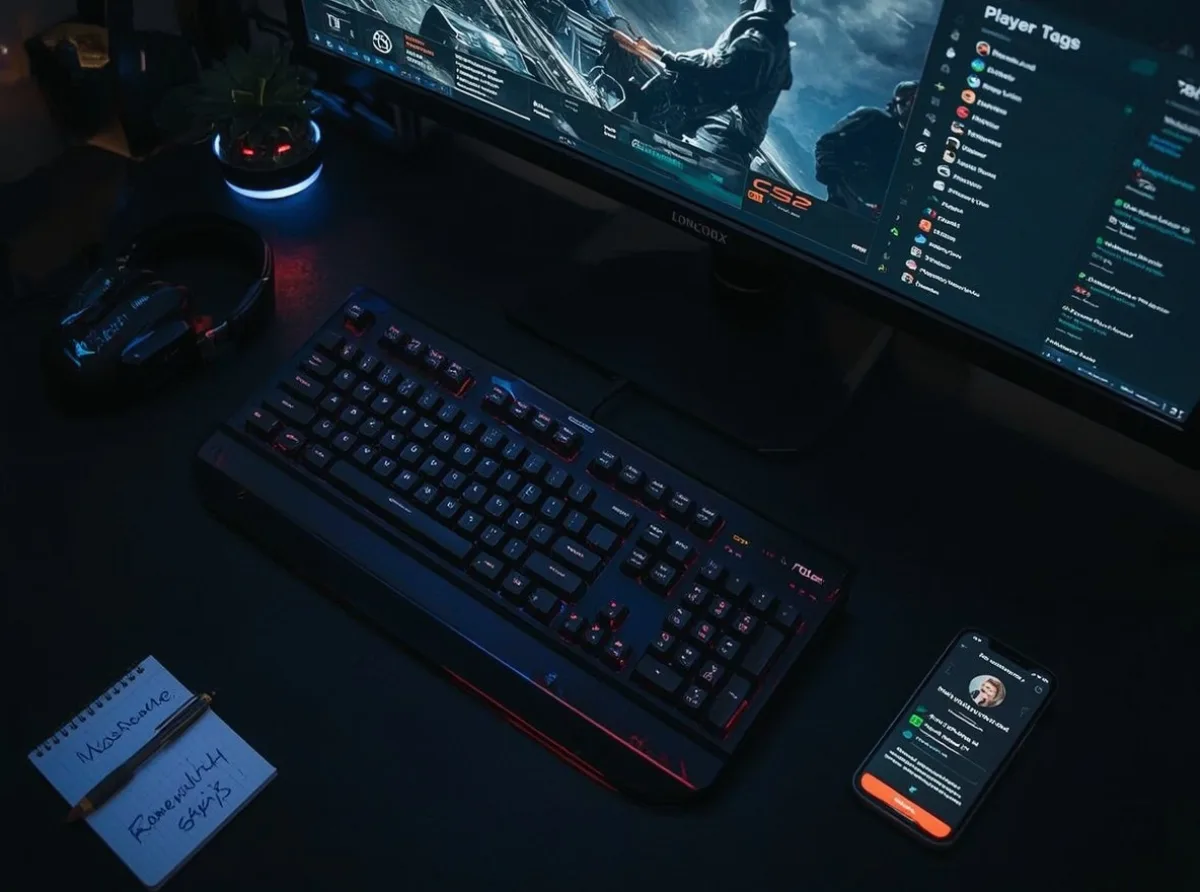
In competitive CS2, a username does more than label an account. It sits beside your crosshair in every lobby, every match, every clip, and every scoreboard screenshot. That makes the name part of the first impression, even before anyone hears your voice or sees your playstyle.
Some players want a name that looks sharp and serious. Others want something clean enough to stay readable in fast moments. A few prefer a name that feels memorable without drawing too much attention. The best competitive usernames usually balance all three.
That balance matters because CS2 is a game where details get noticed quickly. A name that is too long can look messy on stream overlays. A name that is too playful can feel out of place in a ranked environment. A name that is too generic may be easy to forget after one match. Competitive usernames work best when they feel deliberate.
What makes a good CS2 competitive username
A strong competitive username does not need to be intimidating. It needs to be easy to read, easy to say, and easy to recognize. In a game built around fast communication, clarity matters more than decoration.
There are a few qualities that tend to work well in CS2. Short names are easier to scan in the kill feed. Simple letter patterns are easier for teammates to remember. A clean name also looks better when repeated across team tags, tournament brackets, and profile pages.
A good competitive username should feel stable. If it looks clean in a scoreboard, sounds natural in voice chat, and still makes sense months later, it usually works.
Tone is another part of the equation. Competitive names often lean toward calm, focused, or controlled rather than loud or overly playful. That does not mean they have to sound harsh. It means the name should fit the environment without fighting it.
Readability comes first
CS2 moves quickly. Players do not have time to decode a name full of repeated symbols, unusual spacing, or hard-to-pronounce letter chains. If a teammate can call your name once and remember it, that is a useful sign.
- Keep the spelling simple when possible
- Avoid too many numbers in the middle of the name
- Use symbols only if they improve the look, not if they clutter it
- Think about how the name appears in a scoreboard, not only on a profile page
Length affects the feel
Short usernames often look the most competitive because they leave room for the game itself. Longer names can still work, but they usually need cleaner structure. A name with two strong words may feel more polished than one with too many separators.
Many players also prefer names that can fit a tag or team label later. That is one reason simple, flexible names age better. They can survive a role change, a new roster, or a shift in personal taste.
Short usernames that feel sharp
Short names often work best for players who want a serious, focused look. They are quick to read and usually feel confident without trying too hard. In competitive CS2, that can be a real advantage because the name does not distract from the match.
These ideas lean toward clean structure, crisp sound, and easy recognition. Some are single-word style names, while others feel like compact gamer handles.
- Vanta
- Drift
- Nyx
- Blume
- Kairo
- Rook
- Helix
- Vector
- Quest
- Slate
- Cipher
- Vex
Names like these work because they are easy to place in your head quickly. They also avoid clutter. If you are the kind of player who wants your aim, utility, and timing to stand out more than your profile name, a short handle fits that mindset.
Why short names stay practical
Short usernames tend to age well. They are easier to use on multiple platforms, easier to match with clan tags, and less likely to look awkward in future settings. If you move from ranked play to scrims or small tournaments, that flexibility helps.
They also reduce the chance of visual noise. In CS2, a cleaner name often feels more professional even when the player is casual about everything else. That effect is subtle, but it matters.
Names with a disciplined competitive tone
Some usernames do not need to sound aggressive to feel serious. A disciplined tone suggests control, precision, and patience. That fits CS2 well, since the game rewards smart movement and measured decisions just as much as fast reactions.
These usernames usually have a steady rhythm. They sound like they belong to someone who plays with intention. They are a good fit for players who want a composed identity rather than a flashy one.
- Coldline
- Steadfast
- Ironveil
- Northpoint
- QuietHex
- TrueAim
- CleanBreak
- Stillframe
- Edgecraft
- VectorNine
- Lockstep
- Gravemark
These names feel measured. They suggest structure without sounding stiff. If your playstyle is calm under pressure, this kind of username matches that energy well.
In competitive play, a restrained username often feels more believable than an overdone one. The name does not need to announce skill. It only needs to support the impression.
When a disciplined name works best
This style is especially useful if you join organized teams, play faceit-style matches, or spend time in ranked environments where people notice consistency. It also fits players who prefer a mature look on their accounts.
Names with this tone usually avoid jokes, random capitalization, and heavy ornamentation. They feel cleaner because they are built around structure rather than decoration.
Minimal names for players who value clarity
Minimal usernames are often the easiest to remember. They rely on simple forms, plain spelling, and a controlled visual shape. In CS2, that can be surprisingly effective because minimal names never compete with the game’s own pace.
These options often feel best when you want something understated. They can still sound strong, but they do it quietly. That makes them useful for players who prefer consistency over attention.
- OneTap
- Axis
- Null
- Prime
- Fuse
- Trace
- Shift
- Quell
- Pulse
- Reign
- Drifted
- Anchor
Minimal names can also carry a practical advantage. They are usually easier to type, easier to search, and easier for teammates to remember after one lobby. That matters when you queue often or play with rotating groups.
Simple does not mean plain
A minimal username still needs shape. The best ones have a clean sound or a clear image behind them. A word like Trace feels sharper than a random string of letters because it has meaning and a visual identity.
That is why minimal names often outperform more complicated ones. They stay readable while still giving off personality.
Names with a tactical or technical feel
Some competitive players like usernames that hint at systems, precision, or strategy. This style works well for CS2 because the game itself rewards timing, angles, and information control. A tactical name can reinforce that mindset without sounding forced.
These names often use concepts from movement, structure, analysis, or control. They feel deliberate and slightly analytical. They are especially useful if you want your name to sound calm and intelligent rather than loud.
| Style | Example names | Overall feel |
|---|---|---|
| Analytical | Vector, Signal, Index, Monitor | Clean and focused |
| Strategic | Flank, Gridline, Overwatch, Anchorpoint | Team-oriented |
| Precise | Snapline, Crosshair, Trigger, Scope | Sharp and direct |
| System-like | Protocol, Nexus, Kernel, Phase | Structured and modern |
These names work particularly well when you want a more modern competitive identity. They feel less like a nickname and more like a tag someone could imagine seeing in a bracket or on a team page.
Good technical names avoid clutter
The easiest mistake with this style is overloading it with symbols or numbers. A name like Protocol can feel clean. A name like Pr0t0c0l_77 usually loses that effect. The idea should stay readable from a distance.
Technical names work because they sound intentional. Once they become difficult to parse, the advantage disappears.
Names with quiet confidence
Not every competitive username needs to sound intense. Some of the best ones suggest confidence through restraint. These names feel steady, capable, and controlled. They are often a good fit for players who want to project maturity rather than aggression.
This style can be especially appealing in CS2 because it matches the game’s rhythm. Winning rounds often depends on patience and timing, not just pressure. A calm username can reflect that approach.
- Northway
- SilentArc
- Everline
- Clearpath
- Stonewake
- TrueNorth
- Fieldmark
- LowkeyAim
- GreyVector
- PlainSight
- Hardline
- LastSignal
These names carry presence without shouting. They are suitable for players who want to look serious in lobby screens and clip titles without relying on aggressive imagery.
Quiet confidence often travels well across different settings. A username that works in ranked, scrims, and profile pages is usually doing something right.
Names that feel more personal but still competitive
Some usernames work because they sound like a real identity rather than a random handle. That does not mean they need to include a real name. It means they can feel human, grounded, and easy to remember.
This approach is useful if you want something less abstract. A name with a personal rhythm often feels more natural in voice chat and more memorable after repeated matches.
- Alder
- MasonVale
- RowanEdge
- JettCross
- OrionPeak
- HalePoint
- AsherGrid
- NovaRidge
- ElliotFox
- QuinnStone
- RivenHall
- AtlasRow
These names can feel more versatile than highly stylized handles. They are memorable, but they do not push too hard in one direction. That makes them useful for players who want a long-term username that still feels competitive.
Personal names help with recognition
When a username sounds like a stable identity, people tend to remember it faster. That can be useful in active communities where teammates, opponents, and viewers all see the same name repeatedly.
If you stream, post clips, or play with the same group often, a personal-sounding name can feel more consistent than a flashy one. It blends into competitive life without losing character.
Names with a stronger edge
Some players do want their username to feel more forceful. In competitive CS2, that can work if it stays controlled. The goal is not to sound chaotic. It is to sound direct.
Names in this category often have harder consonants, sharper imagery, or a more decisive cadence. They can suit players who like a bold identity as long as the spelling stays clean.
- BlackTrigger
- Killswitch
- Hardpoint
- Ironshot
- Deadangle
- Breakline
- Glasscore
- Redlock
- Warpath
- Coldshot
- Steelmark
- FinalTrace
These usernames should still be readable at a glance. If the name becomes too dramatic or overloaded, it starts to feel less competitive and more theatrical. A sharper edge works best when it is handled with restraint.
Use edge carefully
A strong name can help create presence, but too much intensity can age badly. A username that sounds impressive on day one may feel awkward later if it depends too heavily on trends or exaggerated wording.
Direct names are strongest when they still look clean in text. The visual shape matters as much as the meaning.
How competitive usernames are interpreted
People read usernames faster than they usually admit. Even in casual matches, a name can suggest whether someone seems serious, relaxed, analytical, or difficult to remember. None of that decides skill, but it shapes first reactions.
In CS2, this matters because players see names constantly. In the scoreboard. In team chat. In clip captions. In tournament overlays. A name that fits the environment reduces friction, and that often feels better than something attention-seeking.
Some players prefer names that look professional. Others want names that feel personal and balanced. Both approaches work if they are consistent. The real problem usually appears when a username sends mixed signals.
- A playful name can feel out of place in serious lobbies
- An overly complicated name can be hard to remember
- A name with too many symbols may look cluttered on streams
- A generic name may disappear in memory after one match
The best competitive usernames avoid those traps by staying simple, clear, and believable. They do not need to define the player. They just need to support the identity the player already wants to present.
Patterns that usually work well
There are a few naming patterns that keep showing up in strong competitive usernames. These patterns are practical, not trendy. They help the name stay clean and usable across different contexts.
Single-word handles
One strong word often looks better than a long chain of ideas. It is easier to scan and easier to remember. Examples include Rook, Cipher, and Vector.
Two-part names with clear rhythm
A two-word structure can add personality without becoming cluttered. Examples like Coldline or Northpoint feel complete and balanced.
Names built around motion or control
Words related to aim, timing, movement, or structure often fit CS2 naturally. They suggest precision without needing to explain themselves.
Names that avoid unnecessary punctuation
Symbols are not automatically bad, but they rarely improve a competitive name unless they are used with discipline. A clean word usually reads better than a decorated one.
Alternative variations on the same ideas
If you like a username concept but want a slightly different tone, small changes can make it feel more personal. A name can become softer, sharper, or more tactical with only a few adjustments.
For example, a name like Trace can become Traceline, LastTrace, or SilentTrace. Vector can become VectorNine or GreyVector. Rook can become IronRook or NorthRook. Those variations keep the core idea while changing the mood.
- Trace → LastTrace, ClearTrace, FinalTrace
- Vector → GreyVector, VectorNine, VectorArc
- Rook → IronRook, NorthRook, Rookline
- Signal → LastSignal, SilentSignal, SignalGrid
- Drift → ColdDrift, NightDrift, Driftline
These small adjustments matter because they let you stay close to a name you like without copying a common pattern too closely. They also make it easier to find something available across platforms.
Choosing a name that still fits months later
Competitive usernames work best when they do not depend on a mood that changes every week. If the name still feels right after a long stretch of play, it is probably a good fit. That is especially important if you build muscle memory around the identity itself, not just the gameplay.
A usable CS2 username should hold up in different situations. It should look fine in a five-stack, on a profile, in a team screenshot, or during a tense clutch round. That kind of consistency is more useful than novelty.
The strongest usernames are often the ones that feel almost obvious once you see them. They fit the player, the game, and the setting without needing extra explanation.
That is why clean, calm, and readable names remain popular in competitive play. They do their job quietly, and they keep doing it after the excitement wears off.